Stainless Steel Welding Services For Long-lasting Results
Stainless steel welding is the difference between a structure that lasts decades in Darwin's heat and humidity and one that corrodes within a few wet seasons. For commercial builders, food processing facilities and property developers across the Top End, getting the weld right the first time protects both structural integrity and long-term cost. This guide breaks down why professional stainless steel welding in Darwin matters, where it's used and what separates a durable joint from a weak one.
Why Stainless Steel Welding Matters for Darwin's Toughest Environments
Darwin's climate is hard on materials. High humidity, salt air and intense UV exposure accelerate corrosion in standard steel, which is exactly why stainless steel has become the material of choice for structural and architectural projects across the Northern Territory. Its chromium content forms a passive oxide layer that resists rust, even in coastal and tropical conditions.
But stainless steel only performs as well as the weld holding it together. Poor technique can burn through that protective layer, leaving the joint vulnerable to the very corrosion the material is meant to resist. This is where experienced teams like AKS Welding & Fabrication make a measurable difference – not just in appearance, but in how long a structure actually lasts.
Example:
A commercial kitchen fitout using stainless steel benches and exhaust hoods will fail early if welds aren't properly passivated after fabrication. Left untreated, discolouration and pitting can appear within months in a humid coastal environment – a problem professional welders account for from the outset.
Which Industries Rely on Stainless Steel Welding Services?
Stainless steel welding in Darwin isn't limited to one sector. Its combination of strength, hygiene and corrosion resistance makes it the standard across several industries operating in and around Darwin:
- Construction & architectural projects: handrails, balustrades, cladding & structural framing that need to stay corrosion-free & visually sharp for years
- Food processing & hospitality: benches, prep surfaces & equipment that must meet hygiene standards & withstand constant washdown
- Medical & healthcare facilities: fittings & equipment requiring non-porous, sterilisable surfaces
- Marine & industrial sites: tanks, piping & frames exposed to saltwater & heavy-duty conditions
Each of these applications demands a slightly different approach to welding, filler selection and finishing, which is why working with a team that understands the material across multiple industries matters more than choosing the cheapest quote.
What Makes a Strong Stainless Steel Weld?
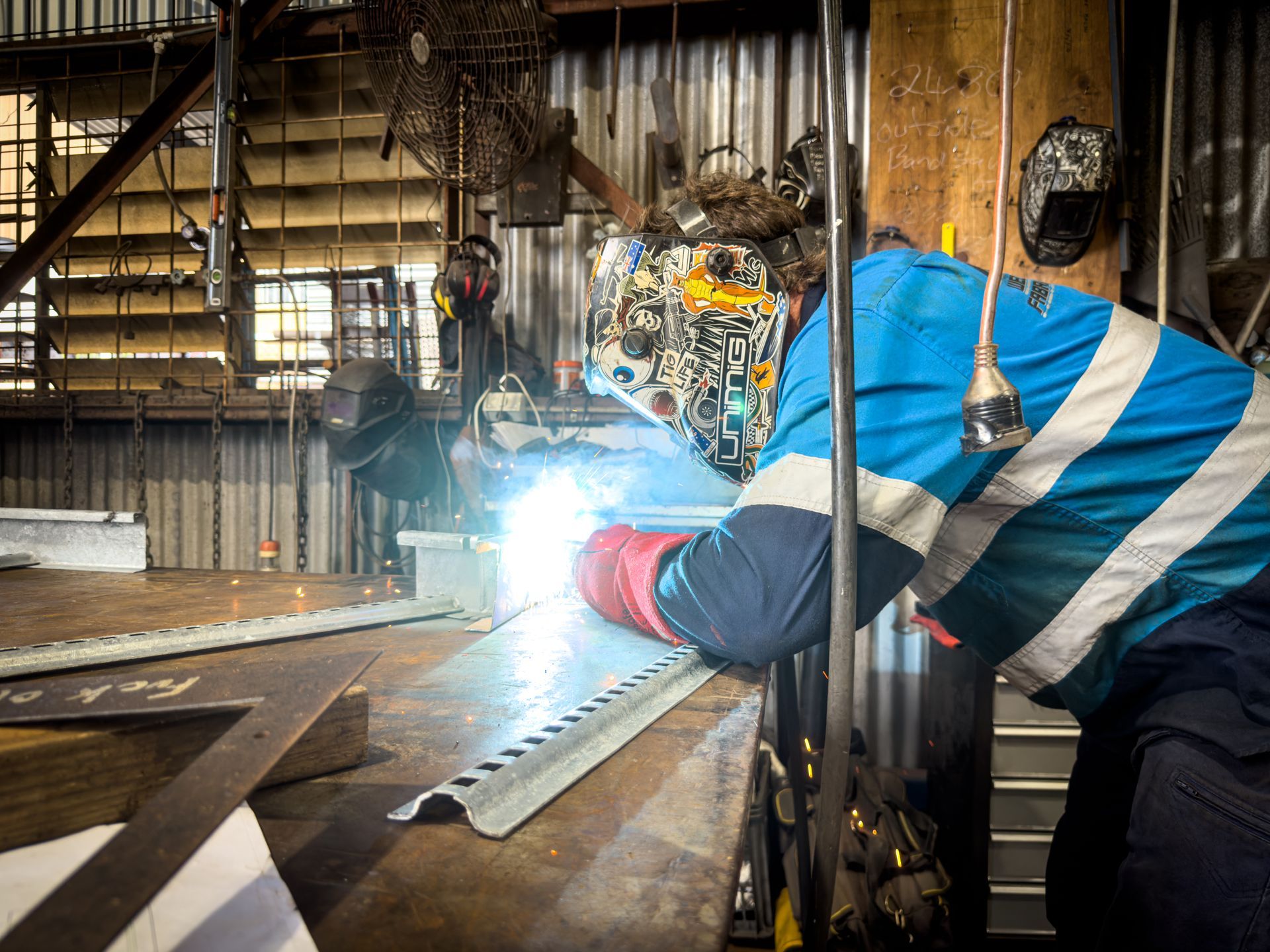
A strong stainless steel weld comes down to controlling heat, preventing contamination and using the right technique for the grade of steel involved. Most professional welding services in Darwin use TIG (tungsten inert gas) welding for stainless steel, since it offers the precision and clean finish that thicker, more visible welding methods can't match.
Key factors that separate a durable weld from a weak one include:
- Correct filler metal selection: matching the filler to the base metal grade to avoid weakening the joint
- Controlled heat input: excessive heat causes warping & can damage the steel's corrosion resistance
- Clean work environment: contamination from carbon steel tools or grinding dust can trigger rust in stainless welds
- Proper joint preparation: clean, well-fitted joints reduce the risk of porosity & weak fusion
Getting these details right takes experience with the material, not just general welding knowledge. Stainless steel behaves differently under heat than mild steel, and techniques needs to reflect that.
How Is Quality Controlled in Professional Welding Services?
Quality control is what separates a weld that looks fine on day one from one that holds up structurally for decades. According to industry best practice, this typically includes visual inspection for consistency and discolouration, checks for porosity or cracking and – on larger commercial or structural projects – non-destructive testing methods to confirm weld integrity beneath the surface.
For projects specified by architects or engineers, documentation of welding procedures and compliance with relevant Australian standards is often required before sign-off. A provider like AKS Welding & Fabrication that can demonstrate this process gives builders and project managers confidence the work will pass inspection the first time, rather than requiring costly rework.
How Should You Maintain Stainless Steel Welds for Longevity?
Stainless steel is low-maintenance, but it isn't maintenance-free, particularly in Darwin's climate. A few practical habits extend the life of welded stainless steel significantly:
- Rinse salt residue & grime off exposed surfaces regularly, especially in coastal or marine-adjacent locations
- Avoid cleaning products containing chlorine or bleach, which can compromise the passive layer
- Inspect welded joints periodically for early signs of discolouration, which often indicates the protective layer has been compromised
- Address any surface damage or scratching promptly to prevent localised corrosion from taking hold
Proper passivation at the time of fabrication does most of the heavy lifting here – a well-executed weld with the right post-weld treatment needs far less ongoing attention.
Choosing a Welding Team for Long-Lasting Results
Stainless steel welding is a specialist skill, not a generic trade service. For builders, developers and facility managers across Darwin, the cost of a poorly executed weld shows up later – in corrosion, structural failure or a finish that doesn't hold up to inspection. Working with a team like AKS Welding & Fabrication, who understands stainless steel's specific demands from heat control to passivation, is what protects the investment in the material itself.
If you're planning a project that calls for stainless steel welding, the right time to bring in a specialist is before fabrication starts – not after a weld has already failed. Contact us to learn more today.
Frequently Asked Questions
What is the best welding method for stainless steel?
TIG welding is generally considered the best method for stainless steel, as it offers precise heat control and produces a cleaner finish than other welding techniques. It's especially suited to visible architectural work and hygiene-sensitive applications like food processing equipment.
Why does stainless steel rust after welding?
Stainless steel can rust after welding if the heat-affected zone isn't properly cleaned or passivated, or if contamination from carbon steel tools occurs during fabrication. This damages the protective oxide layer that normally prevents corrosion.
How long do stainless steel welds last?
When welded correctly and properly maintained, stainless steel welds can last decades, even in harsh coastal or tropical climates like Darwin's. Longevity depends heavily on weld quality, post-weld treatment and ongoing care.
Is stainless steel welding more expensive than standard steel welding?
Stainless steel welding services typically cost more than standard steel due to the specialised equipment, filler metals and technique required. However, the reduced maintenance and extended lifespan often make it more cost-effective long term.
What industries use stainless steel welding most?
Construction, food processing, medical facilities and marine or industrial sectors rely most heavily on stainless steel welding, due to its corrosion resistance, hygiene properties and durability under demanding conditions.
Can stainless steel welding be used for outdoor structures in Darwin?
Yes, stainless steel is well-suited to Darwin's tropical climate, particularly grades chosen for their corrosion resistance in humid and coastal environments. Correct welding and passivation are essential to ensure the material performs as expected outdoors.